





ORGANS OF PARIS © 2026 Vincent Hildebrandt HOME ALL ORGANS


E5
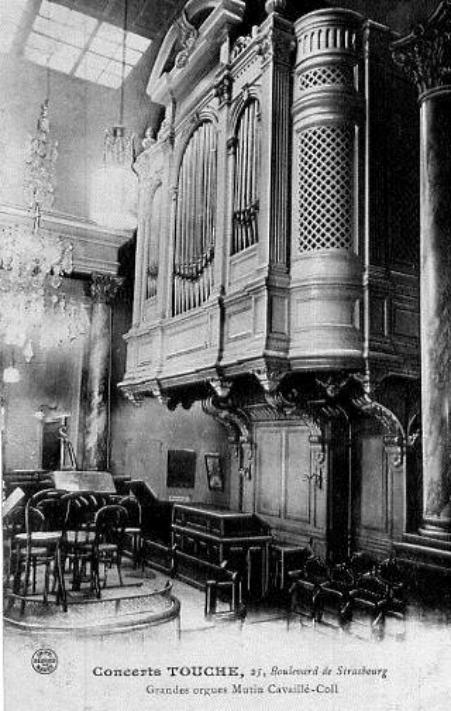
This organ was built by Mutin for the Touche concert hall
in Paris (1906) and transferred in 1926 to Saint-Dominique
(Paris 14th).
Around 1945, he was moved again, this time to Saint-
Antoine de Padua. The organ was then devoid of its buffet,
which is currently in a church in Verdun, housing an organ
of Alexis Collet. It was also electrified and the Great Organ
made expressive.
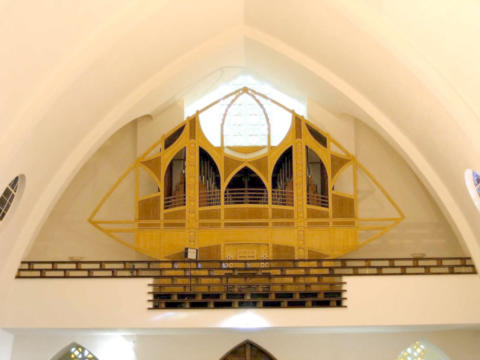
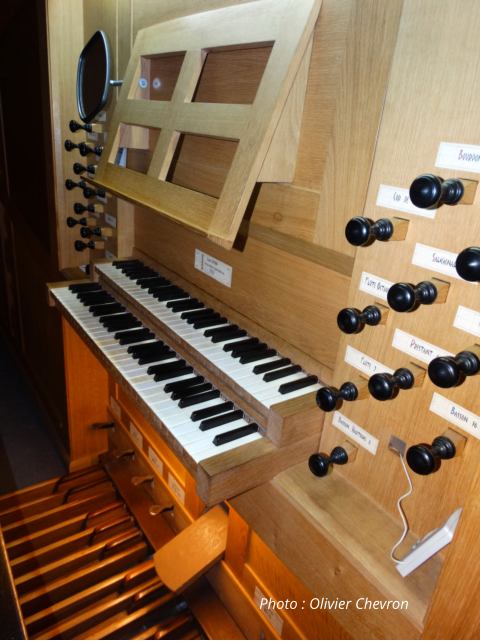
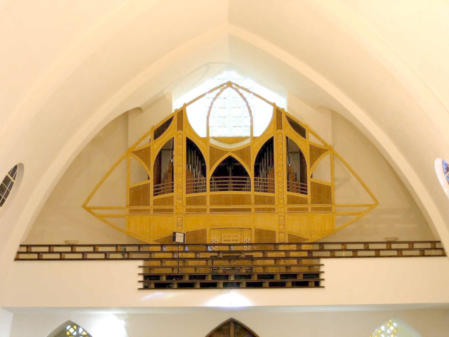
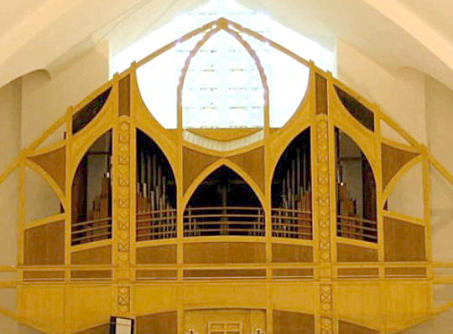
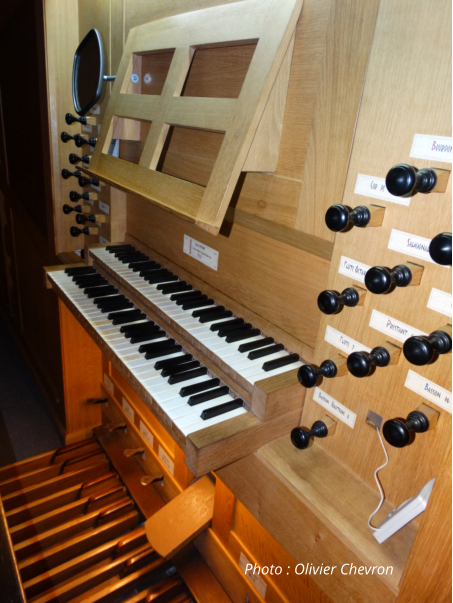
It was restored by Olivier Chevron in 2008, who rebuilt the
instrument to mechanical action with a new case without
façade pipes (designed and built by Olivier Chevron)
adapted to the style of our church. The old pipe front
consisted of the 16 pedal double bass, which is now inside
on a new pedal chest.
The original windchests have been restored and made
airtight. The frame, the wind-carriers, the windchests of
the pedal sets are new. The old pipes were re-used, but
the organ was also extended with four new stops.
Source: Xavier Lebrun.

In April 1919, the demolition of the fortifications
surrounding Paris was decided upon, particularly along
the boundary between the Vaugirard district and the
commune of Vanves. Following the disappearance of
these old defensive walls, the Superior Council for Urban
Planning launched, in 1932, a development plan for the
Paris region that included the construction of 40,000
housing units.
In the 1920s, Abbé Mortier, parish priest of the Chapel of
Saint Francis of Assisi in Vanves, regularly visited families
living in this area of the former fortifications, also known
as “the Zone.” However, the chapel soon proved too small.
Cardinal Verdier therefore decided, through the
*Chantiers du Cardinal*, to build a Franciscan-style church
similar to that in Vanves, based on designs by Léon
Azéma, the bold and sometimes controversial architect of
the Palais de Chaillot.
The foundation stone of the new parish, dedicated to Saint
Anthony of Padua, a disciple of Saint Francis, was laid on
11 June 1933 (the 53rd *Chantier*), at the Porte de
Plaisance. The church was consecrated on 29 September
1935. Its interior follows a basilican plan. The choir is
dominated by a fresco by the painter Jean Bernard,
inaugurated on 5 June 1948. The central motif, a vision
surrounded by a halo of light, depicts the dying Christ. The
lower section bears a prayer to Saint Anthony. At the
entrance to the choir, Saint Francis displaying the stigmata
and Saint Joseph presenting the Christ Child invite the
faithful to share in Christ’s sacrifice. Near the doors, Saint
Thérèse of Lisieux and Saint Anthony recall the missionary
vocation of every Christian.
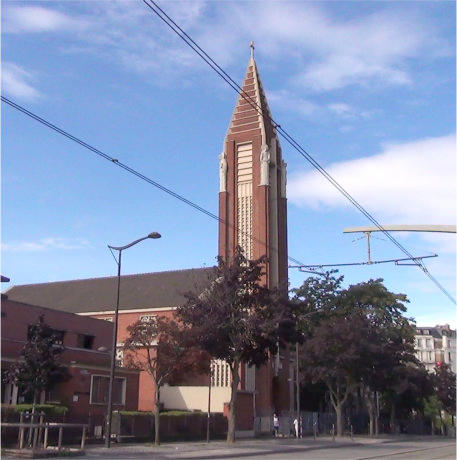
Externally, a 46-metre spire, flanked at the four cardinal
points by statues of Saint Francis and Saint Clare, Saint
Louis and Saint Elizabeth, rises above the building. Three
bells were blessed on 27 November 1938: Antoinette-
Roberte (650 kg), sounding F; Marie-Thérèse (475 kg),
sounding G; and Claudine (325 kg), sounding A.
Source
1906/20 - Mutin (1)
1945 - ?? (3b)
2008 - Olivier Chevron (3)
II/22 (18) - mechanical traction
Stoplist









The organs of Paris


ORGANS OF PARIS © 2026 Vincent Hildebrandt

E5
This organ was built by Mutin for the Touche concert hall in
Paris (1906) and transferred in 1926 to Saint-Dominique
(Paris 14th).
Around 1945, he was moved again, this time to Saint-Antoine
de Padua. The organ was then devoid of its buffet, which is
currently in a church in Verdun, housing an organ of Alexis
Collet. It was also electrified and the Great Organ made
expressive.
It was restored by Olivier Chevron in 2008, who rebuilt the
instrument to mechanical action with a new case without
façade pipes (designed and built by Olivier Chevron) adapted
to the style of our church. The old pipe front consisted of the
16 pedal double bass, which is now inside on a new pedal
chest.
The original windchests have been restored and made
airtight. The frame, the wind-carriers, the windchests of the
pedal sets are new. The old pipes were re-used, but the
organ was also extended with four new stops.
Source: Xavier Lebrun.
1906/20 - Mutin (1)
1945 - ?? (3b)
2008 - Olivier Chevron (3)
II/22 (18) - mechanical traction
Stoplist